There’s a version of living in Europe that most people in the UK and the United States have quietly given up on.
Not the idea of visiting. Not a long weekend in Amsterdam or a summer week in Barcelona. But actually living there.
Waking up in a city with genuine history beneath its streets. Walking to a market on a Saturday morning. Having the time and the money to take a train somewhere new on a whim.
That version of European life, the one that feels full rather than just functional, has become something people associate with an earlier era, or with a level of income most teachers simply don’t have.
Poland changes that calculation entirely.
It is a country that offers the real thing: proper European culture, remarkable cities, extraordinary food, a location at the crossroads of a continent, all at a cost of living that makes it genuinely accessible on a teacher’s salary. Not a compromised version. Not Europe-adjacent. The actual thing, at a price you actually have.
What Teachers Earn in Poland
Salaries for English teachers in Poland start at around 7,000 Polish Złoty per month for those arriving without prior classroom experience. Qualified and experienced teachers earn in the region of 8,500 Złoty, a figure that, once you’ve spent a few weeks understanding what things actually cost in a Polish city, starts to look considerably more comfortable than it might on first reading.
To give that some context: a well-located flat shared between two people, a month’s worth of groceries, regular meals out, a social life, and the occasional weekend away are all achievable within those figures without requiring constant financial vigilance.
You are not scraping by. You are living.
Your Ticket Into Europe
When people hear “affordable Eastern Europe,” a certain image tends to follow: budget hostels, grim winters, a sense of making do. Poland is not that, and it hasn’t been for a long time.
Warsaw is a capital city with a skyline, a thriving arts scene, Michelin-recognised restaurants, and a nightlife that genuinely competes with Western European cities.
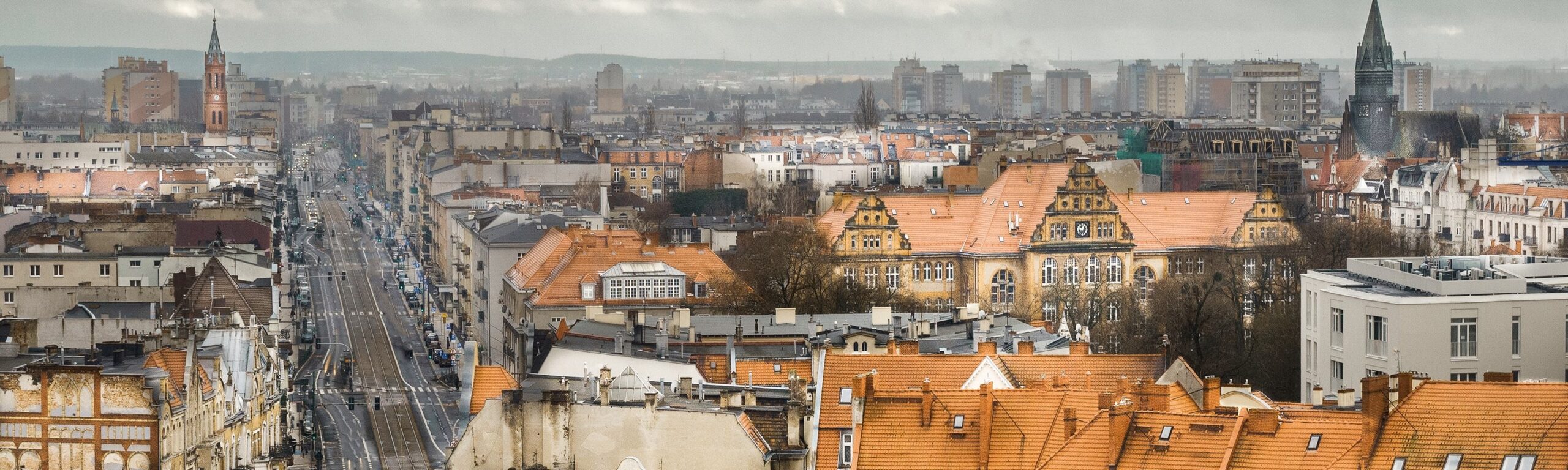
Poznań is one of the most liveable mid-sized cities on the continent, elegant, compact, energetic, and far better known among Europeans than among British or American teachers who haven’t yet made the trip.
Wrocław, with its network of islands and bridges and one of the most beautiful market squares anywhere in Europe, is the kind of place people visit for a weekend and immediately start looking up jobs.
These are not hidden gems in the patronising sense. They are serious, sophisticated, culturally rich European cities that happen to cost a fraction of what comparable life in London, Paris, Berlin, or New York would set you back.
That gap is not a consolation prize. It is the point.
Rent, transport, food from local restaurants and markets, tickets to concerts and exhibitions: all of it priced in a way that means your salary isn’t immediately absorbed by the basics. There is money left over. The question is what you do with it.
The Opportunity to Spend Is Real
This is worth saying plainly, because Poland’s affordability can create a false sense of financial immunity.
The cities are full of life, and that life has a cost. Warsaw’s bar and restaurant scene is genuinely excellent and genuinely tempting. Poznań fills with festivals and events through the warmer months. Wrocław has a cultural calendar that could fill every weekend if you let it.
None of this is a reason to stay home. It’s part of why Poland is worth being here for.
But the teachers who find themselves comfortable at the end of each month are the ones who make local living the default rather than the treat.
Polish food is delicious and inexpensive; eating from local restaurants and market stalls most evenings costs next to nothing and is one of the genuine pleasures of being there. Public transport in Polish cities is reliable and almost free. Local beer is good, and cheap.
But the expensive habits, imported products, high-end international restaurants, and the kind of spending patterns carried straight over from home, exist, and they add up.
The balance is straightforward once you find it. Live like someone who actually lives in Poland, not like a visitor trying to recreate somewhere else, and the numbers work comfortably in your favour.
The Travel
Here is where the Poland placement makes a case that few other teaching destinations can match.
You are in the centre of Europe. Not near it. In it. From Warsaw, Poznań, or Wrocław, the continent opens up in every direction in a way that feels almost unfair if you’ve spent time teaching somewhere more remote.
Berlin is a short journey from Poznań by train or coach, close enough for a weekend and often cheaper to reach than a domestic UK rail fare. Prague, Vienna, Budapest, Amsterdam, Copenhagen: all within reach on a teacher’s budget and a long weekend. Budget airlines operate routes across the continent from all three cities, and the overland options for slower, cheaper travel are excellent.
Poland itself is underexplored by most of the teachers who arrive, which is a genuine waste. The Tatra Mountains in the south offer serious hiking and skiing. Gdańsk on the Baltic coast carries one of the most layered and affecting histories of any city in Europe. The Masurian Lakes, in the country’s northeast, are the kind of landscape, water, forest, silence, that people describe inadequately when they try to explain it later. Kraków, easily reached from all three cities, is one of the finest cities on the continent, full stop.
The teachers who travel most successfully are the ones who plan rather than react, who set a rough monthly budget, treat travel as a normal part of life rather than a luxury, and use the low base cost of living to make room for it. That approach works. We’ve seen it work consistently.
What Poland Actually Feels Like
There’s also something specific about living in Poland that’s worth discussing, because it doesn’t come through in the practical information.
Polish cities have a particular energy, a sense of a country and community that has been through extraordinary things and arrived somewhere genuinely hopeful, without losing the weight of its past.
The architecture holds all of it: the rebuilt grandeur of Warsaw’s Old Town, the Baroque squares of Wrocław, the Hanseatic elegance of Poznań. Walking these cities is not like walking through a museum. They are alive, and they know who they are.
Polish culture rewards those who engage with it. It can seem formal at first, reserved with strangers in a way that takes some adjustment for people used to more immediate warmth. But the friendships that develop through work, through neighbourhoods, through the small rituals of living somewhere properly, they are genuine and lasting.
Learning a few words of Polish, enough to order coffee or thank someone correctly, opens doors that a purely English-speaking existence keeps firmly shut.
But the winters are real. Cold, dark, and long in a way that requires honest acknowledgement. However, they come with their own compensations: warming food that makes complete sense in context, some of the best Christmas markets in Europe, and a social life that moves indoors and becomes, if anything, more intimate.
And when spring arrives in a Polish city, usually in April, the transformation is swift and spectacular and worth every January you endured to get there.
A Note on Saving
Poland will not deliver the aggressive savings potential of a placement in China. That’s an honest comparison and worth making.
What it offers instead is something different: a salary that covers a full, rich European life and leaves room, with intention, for meaningful savings alongside it. Teachers who approach their finances with a basic structure, a fixed amount set aside at the start of each month rather than whatever happens to remain at the end, consistently find that they return home with more than they expected.
The combination of a competitive salary, genuinely low daily costs, and some of the best-value travel access in the world means that saving and living well are not in competition with each other in Poland. Both are available. The balance is yours to find.
Europe Was Always Supposed to Feel Like This
The teachers who get the most from Poland are the ones who arrive ready to actually be there: to eat the food, learn the tram routes, explore the cities on foot, take the train to somewhere new when the opportunity arises.
Poland doesn’t offer a diluted version of the European experience at a discount. It offers the genuine article, the culture, the history, the cities, the travel, the life, at a price that makes it available to people who assumed that kind of existence was out of reach.
Europe was always supposed to feel like this. Poland just makes it possible.
We place teachers in Warsaw and Poznań for new graduates, and in Warsaw, Poznań, and Wrocław for qualified and experienced teachers. Get in touch with us at info@impact-teaching.com to find out more.