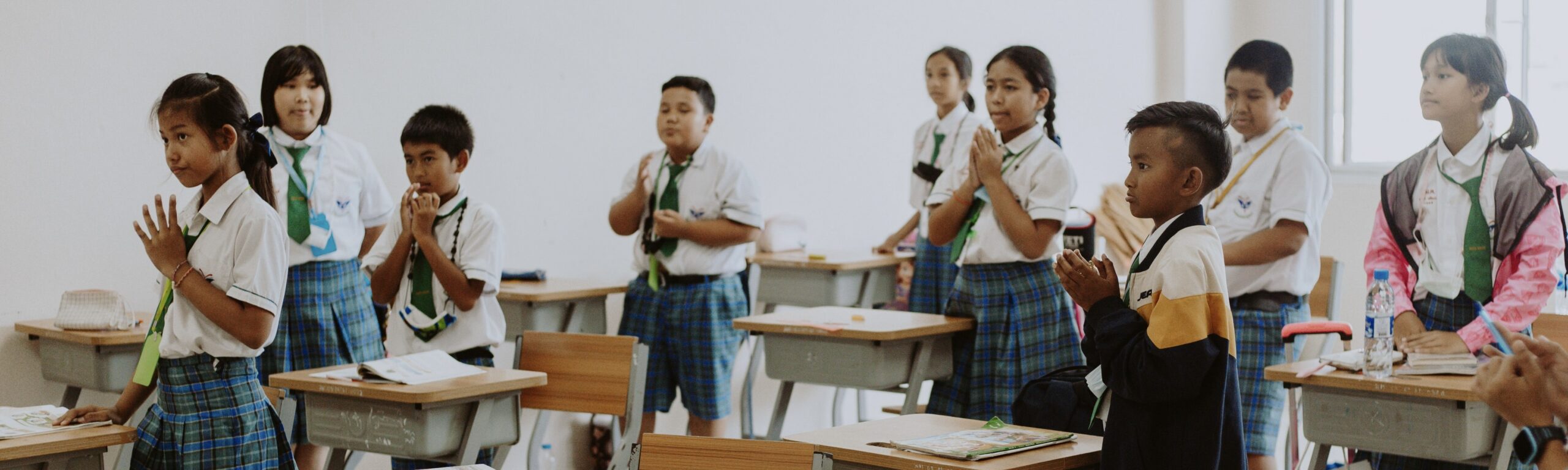
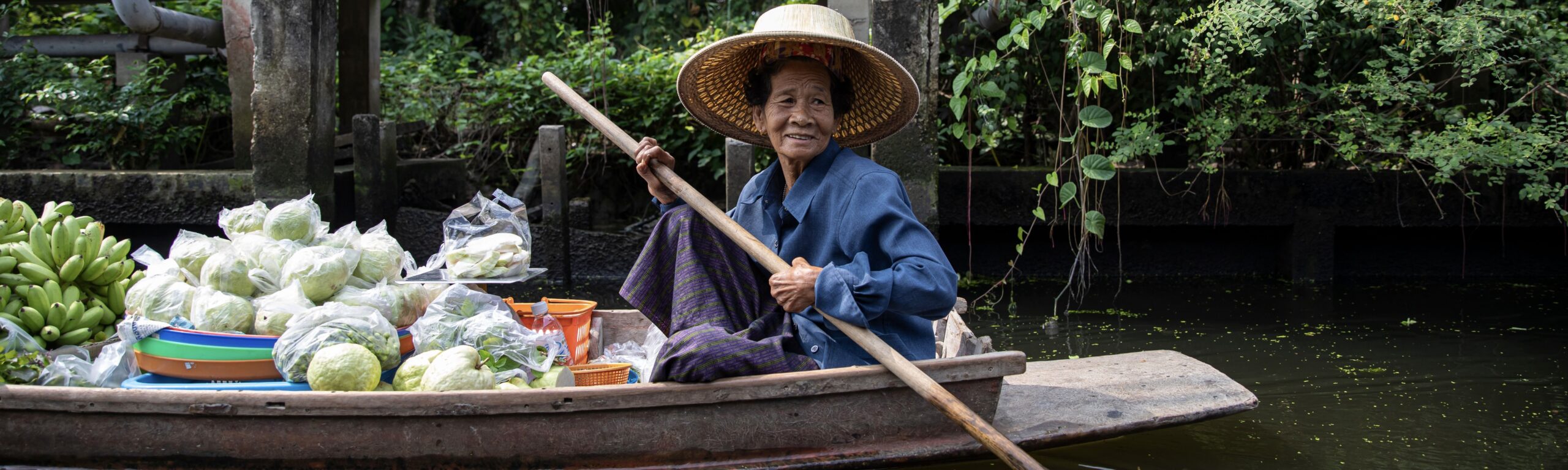
If you ask most people what they know about Thailand, you’ll get one of two answers: absolutely nothing, or a hazy memory of a family holiday to Phuket circa 2004.
Understandable, but it means most people picture “Thailand” as one place, when really it’s four very different ones stitched together.
Bangkok isn’t Chiang Mai. Chiang Mai isn’t Krabi. And Krabi definitely isn’t Khon Kaen. Each region has its own pace, culture, climate and vibe, and where you choose to teach will shape your experience abroad far more than the job itself will.
We’ve written this guide as your straight-talking introduction to all four regions of Thailand, so you can work out where you’d actually thrive, not just where looks nice on Instagram.
And because we have schools across all four regions, wherever you land on this list, there’s a role waiting for you.
To make sense of somewhere 6,000 miles away, we’ve compared each region to somewhere a bit closer to home:
Central Thailand = London & the outer boroughs
Southern Thailand = Brighton & the South Coast
Northern Thailand = Edinburgh & Scotland
Isan = Cardiff & Wales
And one thing we won’t keep repeating: wherever you land, the food and the weather will both be far better than back home. That’s true across all four regions, so take it as read.
Let’s get into it.
Central Thailand: London & the Outer Boroughs
Bangkok is Thailand’s London: the capital, the transport hub, the place where most flights land and most decisions get made. It’s loud, fast, modern and endlessly stimulating. Think skyscrapers next to street food stalls, rooftop bars next to 200-year-old temples, and a BTS Skytrain that’ll get you almost anywhere in half an hour.
If you want city life without giving up convenience (Western amenities, familiar food, a huge international community, and other teachers within arm’s reach), Bangkok has it. It’s also the easiest launchpad for weekend trips, with cheap flights to the islands, the mountains, and everywhere in between.
But just like London isn’t only Buckingham Palace and the Shard, Bangkok isn’t only glossy malls and rooftop cocktails. Head slightly out of the centre and you hit the working, industrial edges, closer to Hounslow than Chelsea. Factories, warehouses, ordinary neighbourhoods getting on with ordinary life. A useful reminder that Bangkok, like London, contains multitudes.
Central Thailand suits teachers who want their first move abroad to feel manageable, with a big expat network, proper nightlife, and a city that never quite switches off. It’s also the most expensive region on this list, and the traffic, noise and crowds mean it can feel full-on fast. If you’re after a quieter pace, this probably isn’t your region.
Southern Thailand: Brighton & the South Coast
The South is what most people picture when they think of Thailand: white sand, turquoise water, and islands with names that sound like an cocktail you might find in a central London bar. It’s Thailand’s answer to the South Coast of England, running from buzzing party spots to sleepy fishing towns, depending on which bit you land in.
Phuket and Koh Phangan are the Brightons of the South, all proper nightlife, a huge international crowd, and a full calendar of festivals and beach parties (Full Moon Party being the obvious one). Further along, places like Krabi and Trang slow right down, trading nightclubs for quiet beaches and dive shops.
Southern Thai culture has its own distinct flavour, literally. The food is spicier, the dialect (Pak Tai) is different enough that locals from Bangkok sometimes struggle with it, and the pace of life leans more relaxed and tide-dependent.
This region suits teachers who want their weekends to look like a holiday brochure (diving, island hopping, beach days) without giving up a solid expat community. Just budget for the tourist mark-up. Things cost a bit more where the boats come in.
Northern Thailand: Edinburgh & Scotland
If Bangkok is London, the North is Scotland: mountains, mist, its own distinct culture, and a noticeably different pace of life. This is old Lanna Kingdom territory, and it still shows in the moated old cities, hilltop temples, and a strong sense of regional identity that’s proudly separate from the capital.
Chiang Mai and Chiang Rai are the Edinburghs of the North, proper cities with history, culture, and serious creative streaks, but small enough to actually get to know. They’ve become hubs for artists, coffee obsessives and digital nomads, with night market scenes and food that’s easy to get carried away with.
Beyond the cities, the region opens out into genuine Highlands territory: hill tribe villages, jungle trekking, waterfalls and, during cool season (roughly November to February), temperatures that actually require a jumper in the evenings. It’s the closest Thailand gets to “cosy.”
Cost of living here is noticeably lower than Bangkok, the pace is slower, and the community leans creative and outdoorsy rather than corporate. It suits teachers who want culture and nature in equal measure, without sacrificing a proper expat scene.
Isan: Cardiff & Wales
Isan is the region most first-time visitors skip, which is exactly why it’s worth talking about. Stretching across Thailand’s northeast, it’s the least touristy part of the country, with its own language (a close cousin of Lao), its own food, and a culture shaped as much by its neighbours across the Mekong as by Bangkok.
Think of it as Thailand’s Wales: proud, distinct, a bit overlooked by outsiders, and full of people who’ll happily tell you why their region does things better. Cities like Khon Kaen and Korat play Cardiff’s role, proper cities with universities, malls and a growing expat presence, surrounded by farmland, rice paddies and small towns that rarely see a foreign face.
The food alone is worth the move (som tam, larb, and sticky rice) and the festivals are some of the best in the country, from Ubon’s candle parades to the genuinely explosive Rocket Festival.
Isan suits teachers who want the real, unfiltered version of Thailand, lower cost of living, warmer welcomes precisely because foreigners are still a novelty, and a slower, community-first way of life. It’s not for everyone (nightlife and Western comforts are thinner on the ground), but for the right person, it’s the most rewarding region on this list.
So, Where Should You Teach?
There’s no wrong answer here, just a better fit for how you want to live. Want convenience, career networking and a city that never sleeps? Central Thailand. Want your weekends to look like a screensaver? The South. Want mountains, culture and a flat white with your temple visit? The North. Want the most authentic, least-filtered version of Thailand going? Isan.
The truth is, most teachers end up loving wherever they land, but it helps to go in with your eyes open. And because we have schools across all four regions, you don’t have to guess from the outside. Get in touch, and we’ll help you find the one that actually fits.
You can get in touch at info@impact-teaching.com.
In October, our 2026 Thailand teachers will be heading out for orientation and training in Bangkok. Don’t hang about if you want to join them! School allocation has started but there’s still time to start an incredible adventure this year.