
Whether you’re a recent graduate, still studying, or already working, you’ve probably felt it. The job market feels different, and AI is a big part of why.
Entry level roles in law, marketing, coding and admin are exactly the kind of jobs AI is best at chipping away. Junior tasks. Repetitive tasks. The tasks that used to be how people got a foot in the door, or moved up once they were in. That door is getting narrower, and it’s a genuinely reasonable thing to worry about, whatever stage you’re at.
So here’s a question worth asking. Where does teaching abroad sit in all this?
Why the Classroom Is Hard to Automate
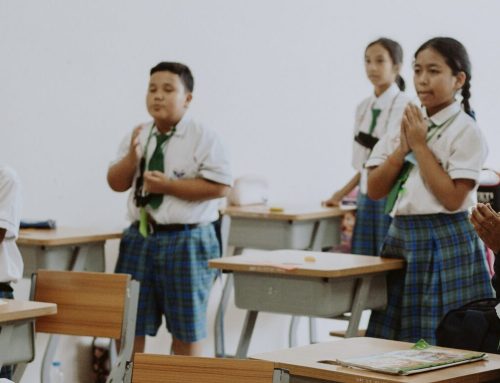
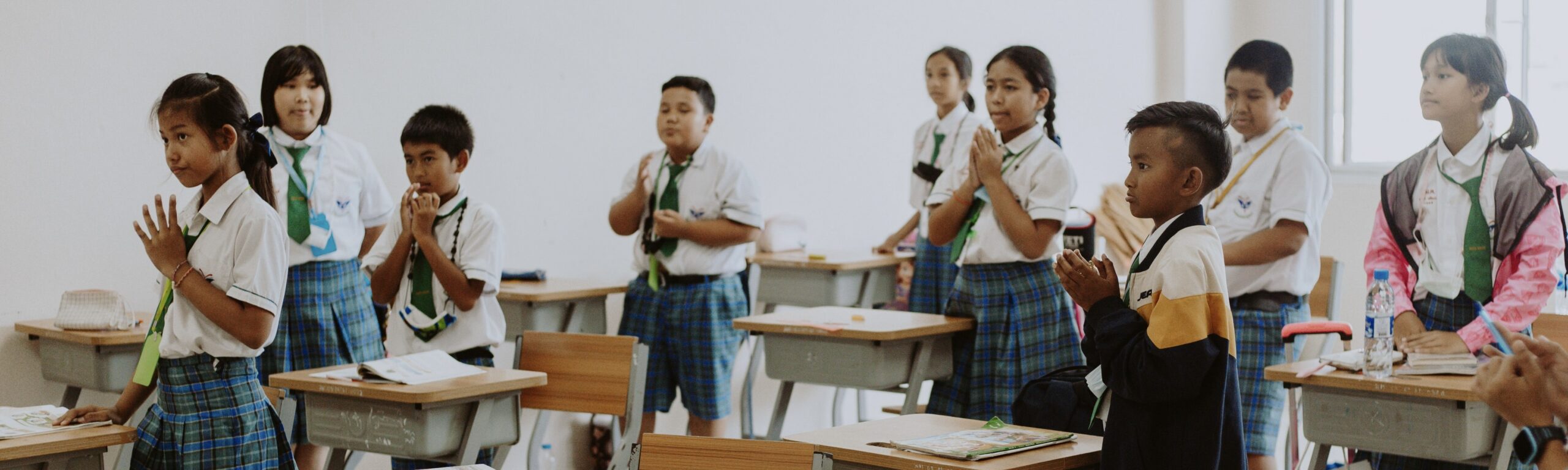
Teaching, especially with young learners and in person, isn’t a repetitive task you can hand to a model. It’s reading a room of eight-year-olds and knowing which one needs a joke and which one needs quiet. It’s adapting a lesson on the fly because half the class clearly didn’t get it the first time. It’s classroom management, patience, timing, presence.
None of that lives in a chatbot. AI can generate a worksheet, but it can’t stand in front of thirty kids in Chiang Rai or Poznań and hold their attention for forty-five minutes. That’s a human skill, and it’s the actual job.
Let’s be direct about it. Teaching abroad isn’t going anywhere anytime soon. Schools across the world aren’t lining up to replace their foreign teachers with software, because the thing they’re actually paying for isn’t information delivery, it’s a real person the kids connect with.
That demand isn’t shrinking. If anything, as more graduate jobs get squeezed by AI, teaching abroad becomes a more obvious option, not a less obvious one. So the real question isn’t whether the job is safe. It clearly is. The question is whether it’s the right choice for you, and how AI actually changes the day to day once you’re in it.
The Skills You Build Are the Ones AI Can’t Fake
There’s another layer to this worth spelling out. The skills you pick up teaching abroad aren’t just “soft skills” in the vague, throwaway sense. They’re the exact things employers say they can’t find enough of.
Public speaking to a room that doesn’t automatically listen to you. Managing behaviour without a script. Problem solving on the spot when the lesson plan falls apart five minutes in, or the projector dies, or half the class hasn’t slept because of a festival the night before. Cross cultural communication that actually works, not the version you read about in a training manual.
Come back from a year teaching abroad and you’ve been quietly building the kind of resilience and adaptability that’s genuinely hard to fake in an interview, because you’ve actually done it, under pressure, in a country that isn’t yours. And AI can’t help you with any of that.
AI as Your Assistant, Not Your Replacement
Here’s the flip side, and it’s worth being honest about it. AI is genuinely useful for teachers, and most of our own team use it regularly.
Lesson planning, worksheet generation, quick grading support, fresh activity ideas when you’ve run out of them at 9pm the night before. All of that is faster now. What AI does is take the admin heavy, repetitive parts of the job off your plate, so you’ve got more energy left for the part that actually matters, which is standing in front of your class.
If anything, that makes the job better, not more at risk. You get to spend more of your time being a teacher and less time formatting a handout.
Say you’re teaching an eleven-year-old class in Hangzhou and you want a reading exercise about the local food market instead of the generic textbook one. AI can draft that in a minute. Or you’re not sure how to structure a first lesson on past tense. AI can give you a starting point to build from, rather than you staring at a blank page the night before term starts.
It’s not doing your job for you. It’s clearing the boring bits out of the way so you can focus on the part only a human can do.
The Bit AI Can Never Touch
This is the real reason teaching abroad is worth thinking about right now.
Living in another country changes you in ways a job at home simply doesn’t. Learning to navigate a new culture. Picking up a language, even just enough to order dinner or haggle at a market. The friendships you make with people from completely different backgrounds. The version of yourself that comes out the other side is more adaptable, more confident, and more interesting to talk to at a dinner party.
No AI model replicates that. It can’t live your life for you, and it definitely can’t hand you the story of the year you taught abroad. That’s not a CV line an algorithm can write. It’s something you have to go and do.
Stable Now, Amazing Later
Put those two things together and you get something rare. A job that’s genuinely difficult for AI to touch, that uses AI to make your working life easier rather than harder, and that gives you an experience most people chasing a safer sounding office job will never get.
If the future feels uncertain right now, teaching abroad is one of the more solid places to stand. It’s not just a job that’s safe from automation. It’s a year, or two, or more, that sets you up for life.
Ready to Take the Next Step?
Check out our programs in China, Thailand, Hungary, and Poland.
If you’re still weighing it up or have any questions, email us at info@impact-teaching.com.