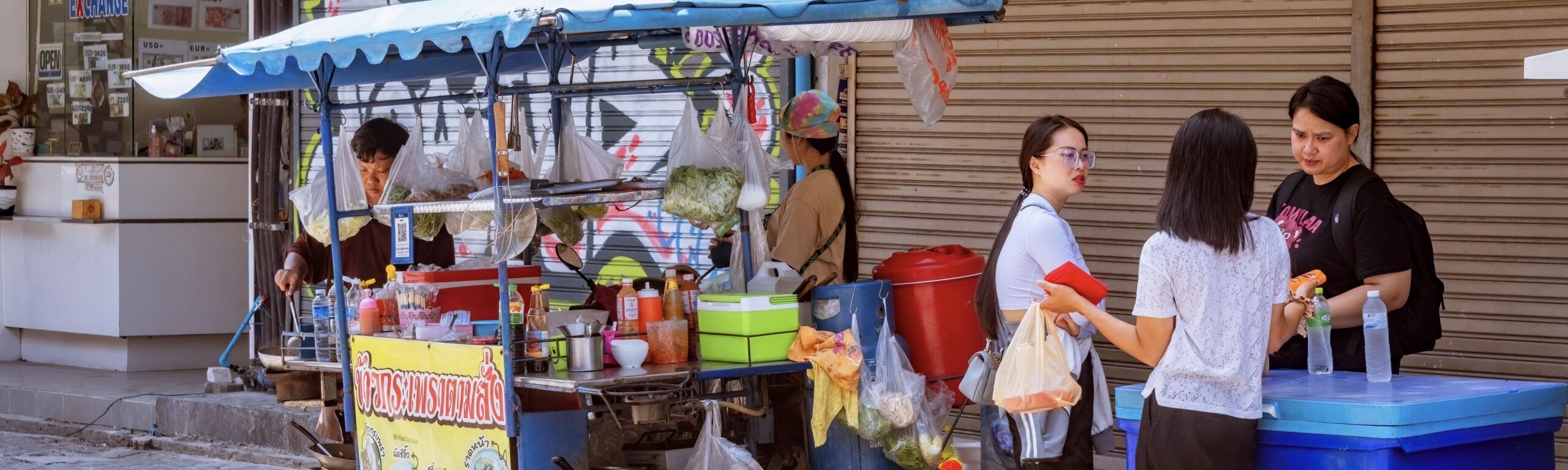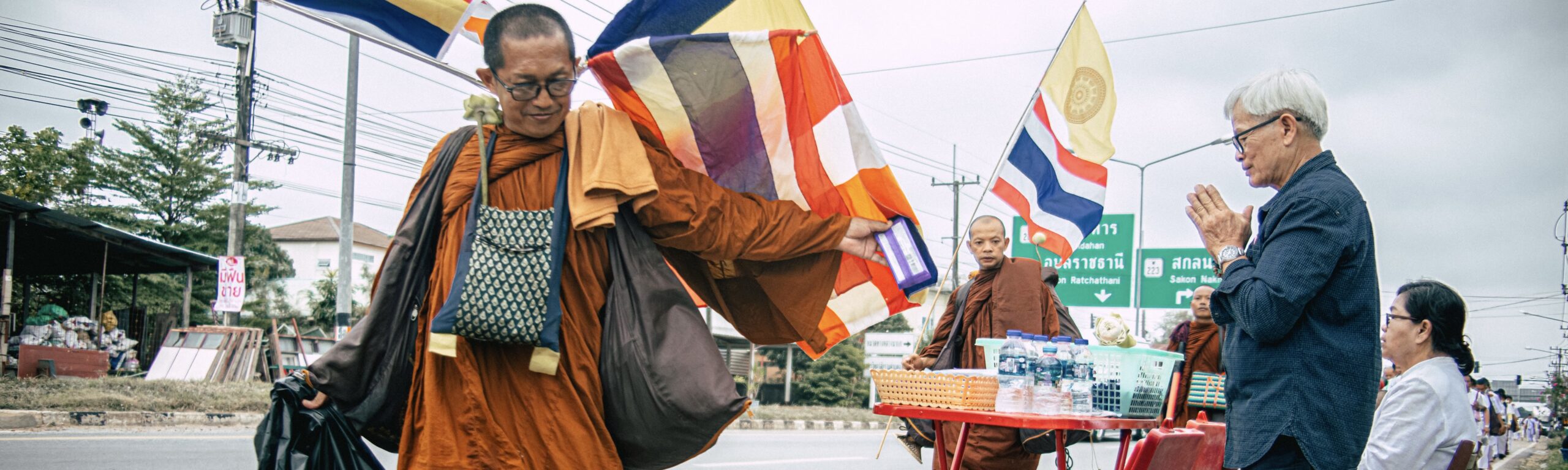

I’ve lived in Thailand for closer to four years than three now. That’s enough hot seasons to stop pretending I’m used to the heat, enough rainy seasons to own a frankly embarrassing number of ponchos, and enough cool seasons to catch myself calling 18°C “freezing” with a straight face.
So when friends back home ask me when they should visit, I give them the same answer every time. There’s never really a bad time to come to Thailand.
I know. That sounds like a cop out. But it comes with one important catch: you need to know what you’re coming for, and what you’ll actually get when you land. Thailand in January and Thailand in April can feel like two different countries. One is blue skies and breezy evenings. The other is the kind of heat that makes you question every decision that led you outside at 1pm.
Rather than pick a month and pretend it suits everyone, I’ll break the year down into Thailand’s three seasons. What each one is like, who it suits, and what the catch is. Then I’ll leave it to you to decide what best fits your trip.
Cool season: November to February
This is the season everyone tells you to book, and for once, everyone is right. Mostly.
The rains have cleared, the skies are a proper postcard blue, and the humidity finally eases off. Bangkok and the beaches still sit around the low 30s during the day, which is hot by British standards but feels almost civilised here. Up north it’s a different story. Mornings in the mountains can be genuinely cold, and on the highest peaks the temperature can drop into single figures overnight.
Don’t be surprised to see locals in puffer jackets and woolly hats when it dips to 15°C. You’ll laugh at first. Give it a year of living here and you’ll be wearing one too.
What you’ll get
This is the easiest time of year to do a bit of everything. It’s the best window for trekking and exploring the north, the Andaman coast (Phuket, Krabi, Koh Lanta, and friends) is at its calmest and clearest, and you can wander a city at midday without needing a lie down afterwards.
It’s also festival season. Loy Krathong usually falls in November, when people float candlelit offerings on rivers and lakes across the country, and Chiang Mai lights up the sky with lanterns for Yi Peng at the same time. Then there’s Christmas, New Year, and often Chinese New Year in late January or February, which Bangkok’s Chinatown takes very seriously.
The catch
Everyone else knows all of this too. The cool season is peak tourist season, and the stretch from mid-December to mid-January is the busiest of all. Prices go up, the best places to stay book out early, and the famous spots get crowded. If you’re coming in this window, book ahead and set your expectations accordingly. You won’t be the only person at the viewpoint.
Best for: first-timers, anyone who doesn’t cope well with heat, hikers, and people who want Thailand at its most comfortable and don’t mind sharing it
Hot season: March to May
I’m not going to dress this one up. It’s hot.
Temperatures in the mid to high 30s are normal, and in April parts of the country push past 40°C. Add the humidity and you get the kind of afternoon where the walk from your hotel to the nearest 7-Eleven feels like an achievement. The fridge aisle inside becomes a legitimate tourist attraction.
And yet, I’d never tell anyone to avoid it.
What you’ll get
Songkran, for a start. Thai New Year runs from 13 to 15 April, and the whole country turns into one enormous water fight. Strangers will soak you with buckets, kids will ambush you with water pistols, and pickup trucks loaded with barrels will cruise the streets looking for targets. Underneath the chaos it’s a family holiday, with people visiting home, making merit at the temple, and pouring water over the hands of their elders as a sign of respect. Then they go back outside and drench you again.
The beaches are also at their best for actually being in the sea. Once the peak season crowds thin out, prices start to drop, and you’ll often have more space to yourself. It’s also mango season. April and May are when mango sticky rice is at its absolute peak, and that alone is worth a bit of sweat.
The catch
The heat genuinely shapes your days. Sightseeing happens early in the morning or late in the afternoon, and the middle of the day is for air conditioning, shade, a swim, or a long lunch. If you’re planning to walk around temples at noon in April, I admire your optimism. Wear a hat, drink more water than you think you need, and build in time to do absolutely nothing.
Best for: beach lovers, anyone who wants to be part of Songkran, and travellers who’ll trade a bit of comfort for fewer crowds and better prices
Rainy season: June to October
The name does it no favours. Nobody books a holiday hoping for rain, and “monsoon” isn’t a word that sells many flights.
But this is the season I’d most like to stick up for, because it’s nothing like what most people picture. It very rarely rains all day. What you usually get is a sunny or cloudy morning, then a heavy downpour in the afternoon or evening that lasts an hour or so, and then it clears. The first storms often roll in during May, things tend to peak around September, and it eases off again through October.
There’s something genuinely lovely about sitting under a cafe roof, iced coffee in hand, watching a storm sweep across the rice fields. There’s something much less lovely about being caught in that same storm on a motorbike, ten minutes from home. Still, everything dries off quickly here. Including you.
What you’ll get
Thailand at its greenest. The rice paddies fill up, the hills turn a ridiculous shade of green, and the waterfalls go from a trickle to the real thing. It’s also a touch cooler than the hot season, and once the rain has passed, the air feels fresher than it does all year.
The crowds drop right off, too. Accommodation is cheaper, you can turn up at places that would be packed in December, and you’ll get a much better sense of everyday Thai life without a tour group in every photo.
The catch
You need to be flexible. Some days really do rain from start to finish, roads in rural areas can get muddy or flooded, and boat trips get cancelled when the sea is rough. On the Andaman coast, the Similan and Surin Islands close completely every year from mid-May to mid-October. Pack a decent rain jacket and a strong mosquito repellent, and keep your plans loose enough to shuffle around the weather.
Best for: travellers on a budget, anyone who hates crowds, nature lovers, and people who are happy to swap a beach day for a cafe day when the sky decides for them
Two curveballs worth knowing about
Three seasons is a neat way to think about Thailand, but the country is long, and not everywhere sticks to the script. These are the two exceptions that catch people out most.
The islands run on different timetables
Thailand has two coastlines, and their weather doesn’t line up. The Andaman side (Phuket, Krabi, Koh Lanta, and the Phi Phi Islands) is at its best from roughly November to April, then gets rougher seas and heavier rain from May onwards.
The Gulf of Thailand side (Koh Samui, Koh Phangan, and Koh Tao) works differently. It often stays fairly dry through the middle of the year, when the Andaman coast is at its greyest, and gets its heaviest rain from around October to December instead. So if you’re coming in July and want a beach, head to the Gulf. If you’re coming in February, the Andaman coast is hard to beat.
The north has a smoky season
This is the one I’d genuinely plan around, and as someone who lives up north, I don’t say that lightly. From around February to April, crop burning and forest fires send a haze across Chiang Mai, Chiang Rai, and the surrounding provinces. Air quality can drop to unhealthy levels, often at its worst in March, and the mountain views that make the north so special disappear behind a grey wall.
It doesn’t mean the north is off limits for three months. But if mountains, trekking, and fresh air are the reason you’re coming, aim for November to January, or wait until the first rains clear the air. And if you do come during smoky season, keep an eye on an air quality app and pack a few proper masks.
So, when should you come?
I promised I’d leave this one to you, and I’m sticking to it. But if it helps, here’s how I’d think about it.
- Come in the cool season (November to February) if it’s your first trip, you don’t do well in the heat, or you want the north at its best
- Come in the hot season (March to May) if you’re here for the beaches, you want to get soaked at Songkran, or you’re happy to sweat a little for quieter streets and lower prices
- Come in the rainy season (June to October) if you’re on a budget, you’re flexible with your plans, and you’d rather see Thailand green and quiet than busy and bone dry
None of the three is the wrong answer. They’re just different trips.
Final thoughts
Here’s the thing nobody mentions when they’re debating the perfect month. Two weeks in Thailand, whenever you come, only ever shows you one version of the country.
Living here, you get all three. You learn to love the crisp cool season mornings, to plan your whole day around the hot season sun, and to find the rainy season oddly relaxing once you stop fighting it. I’d even say I’ve grown fond of April. Most days.
If seeing all three for yourself sounds tempting, teaching English in Thailand is one of the best ways to do it. Our Thailand program page has everything you need on locations, salaries, and start dates, and if you’re wondering when to make the move, we’ve written a whole guide on the best time to start teaching in Thailand. Or just drop us an email at info@impact-teaching.com. We’re always happy to talk it through, whatever the weather.